An herbal narrative
Sambucus cerulea.
Blue Elder.
As a fellow from east of the Cascades, Blue Elder (Sambucus cerulea) has always felt like family. When I would walk to school barefoot on a sandy shortcut stretch of abandoned road, I would pass a few elders. To me, they were just that, wizened and ancient friends who deserved deep respect and awe. In the dry soil, these elders stood frail and resilient. Often half the wood would have been drought-dead and brittle for years, but there would be fresh growth dependably reaching from precious reserves at the base. I would stand there, feel and smell their pungent leaves, and wonder, ‘what can I offer?’
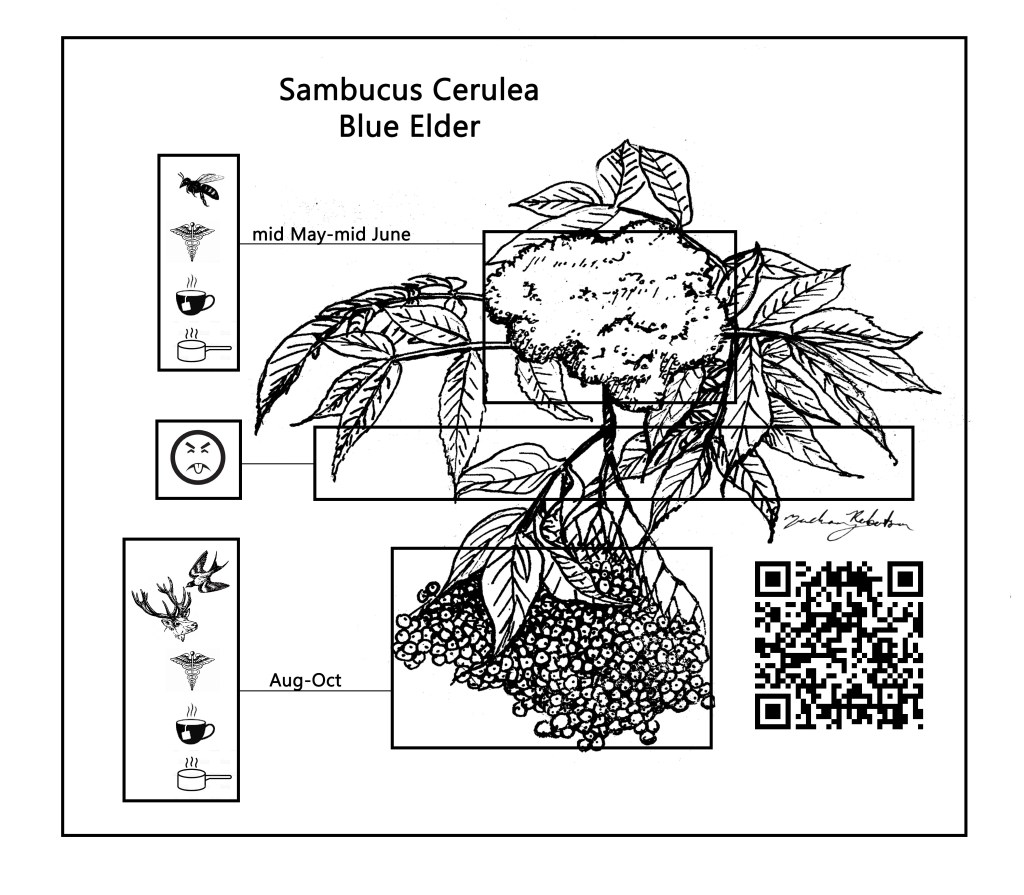
In my early adulthood I felt that learning to feed ourselves from what grows wild around us is a key to right relationship with the land, so I began experimenting with elder. I learned to make fritters and tea of the aromatic, but scant, elder flowers. The wood, leaves, and stems are toxic, so this act required care and attention, but was none the less rewarding.
In late summers and autumns I always nibbled a few berries in passing. The skin of the tiny clustered blue-black orbs have evolved to host a thick film of powdery white yeast which I assumed would make a good addition to my gut’s digestive biome. I like eating a few raw, but I don’t really suggest it. When raw, the berries contain an alkaloid which can cause some tummy distress. I ate just enough to get the benefits of the raw vitamins & antioxidants but never so much to feel the ill effects.
As an adult, elderberry collection and processing became quite an extensive ritual. Elderberries are wonderful dehydrated for tea. They excel steam-juiced and when added in equal parts with honey and brandy produce a joyous medicinal cordial. They make a fine jam and jelly. Elder wine is astringent and rich like red wine, but far too bitter unless made sweet. Concoctions made of elderberry impart antiviral and antioxidant qualities.
With the fruit having such strong benefits and appeal, it is tempting to harvest trees bare. We are of many animals who use this fruit for medicine and food as we enter the cold months. Please follow the wild harvester’s rule of thirds and never take more than a third of a plant’s bounty, even when hanging heavy as elder fruits do. Remember to leave berries within deer-reach as well as reach of hungry birds.
There is an ancient tradition of making flutes from elder branches. The wood has some toxicity, so I haven’t yet tried it.
Perhaps it is in the ecological relationships it holds or in a metaphoric identification we make with the plant’s observable qualities, perhaps it is something else, but there is a magic to elder that you can feel. In some animist traditions, elder is a gateway between realms and shows the strength that can come in holding opposing forces. The juicy black berries which cover themselves in a powdery white yeast to turn bright sky blue. A tree appearing half dead for ages bringing bountiful food and medicine to the desert. Tiny berries, held in heavy clumps. I’m sure you too will soon be listening to your elders.
 Read Norma NormaL children's books!